
Building a Precision Lead Generation Engine for a Leading Aircraft Manufacturer
How Adflow Digital built an always-on digital acquisition programme generating 80+ qualified enquiries every month for Combat Search and Rescue and Search and Rescue helicopter platforms in the United States.
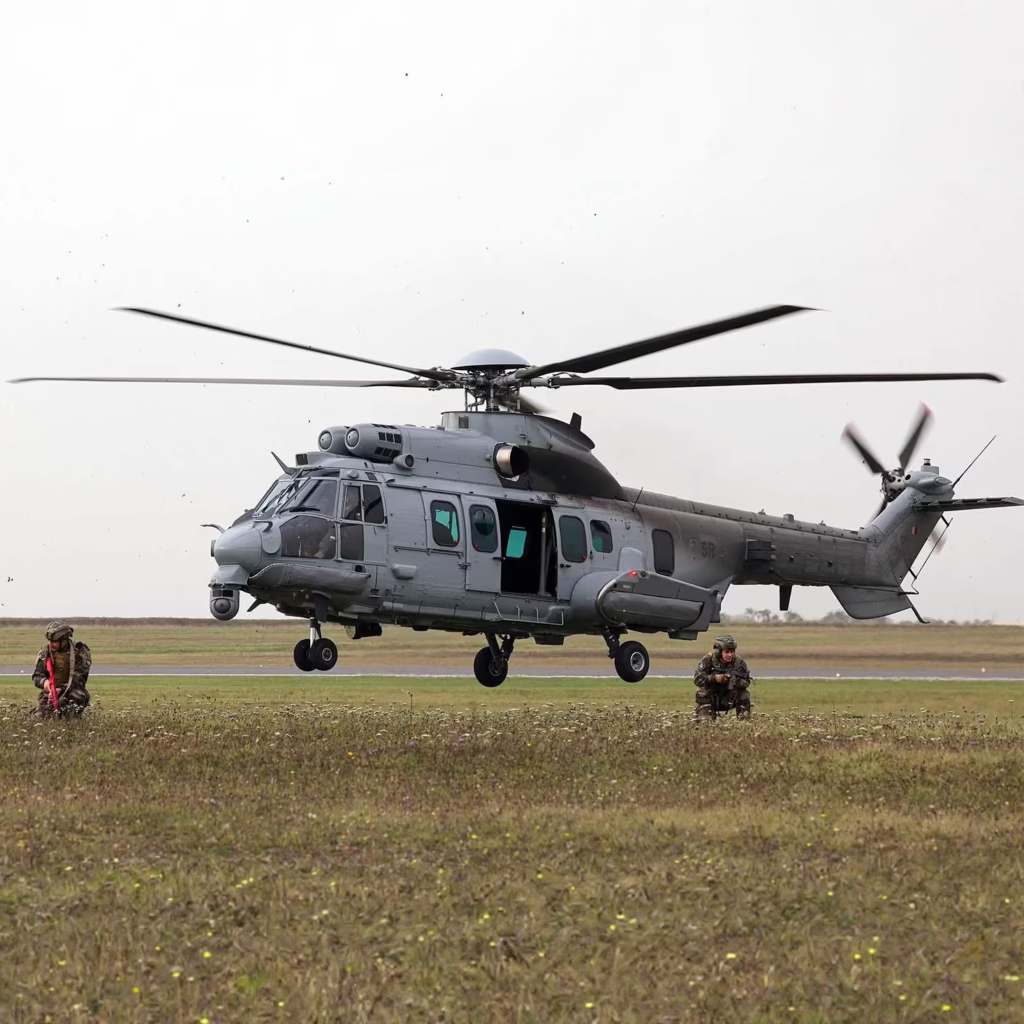
Adflow Digital worked with a leading aircraft manufacturer to develop an ongoing lead generation programme for two specialised helicopter categories in the United States: Combat Search and Rescue (CSAR) aircraft for defence and government audiences and Search and Rescue (SAR) aircraft for civilian emergency-response organisations.
The addressable market was highly specialised. For CSAR, the campaign needed to reach relevant audiences associated with the U.S. Air Force, U.S. Navy, U.S. Coast Guard and stakeholders connected to the House and Senate Armed Services Committees. For SAR, the focus shifted towards police departments, fire departments and other organisations involved in emergency response and rescue operations.
Unlike conventional B2B campaigns, success was not defined by generating large volumes of low-intent traffic. The objective was to consistently create qualified enquiries from organisations and stakeholders with a genuine interest in evaluating aircraft capabilities, creating an ongoing pipeline of commercial opportunities every month.
The Challenge
Aircraft acquisition operates within one of the most specialised and high-value B2B environments.
The potential audience is comparatively small, buying cycles are long and decisions involve multiple stakeholders across operations, procurement, leadership and government. Broad aviation targeting would therefore generate significant irrelevant traffic while offering limited visibility into whether users had any meaningful connection to aircraft evaluation or acquisition.
The campaign also needed to address two fundamentally different markets.
For Combat Search and Rescue, communication needed to reach military, defence and government audiences evaluating aircraft against demanding operational requirements.
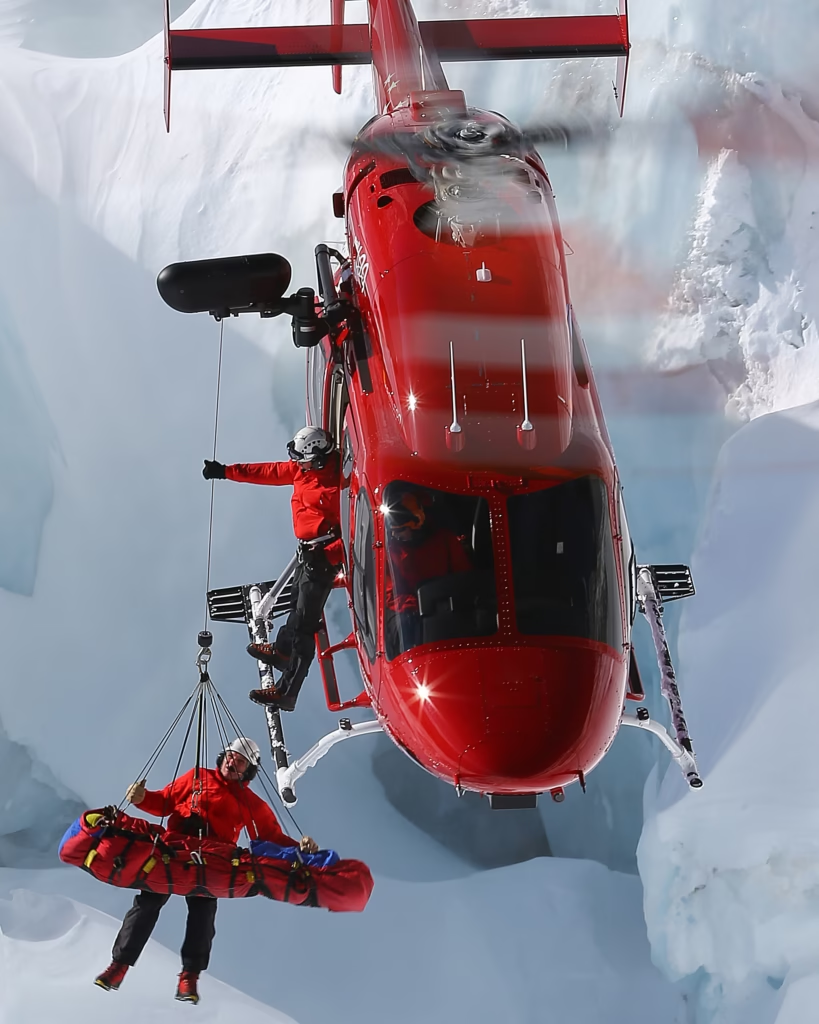
For civilian Search and Rescue, the audience consisted primarily of police and fire organisations seeking aircraft capable of supporting emergency response and rescue missions.
Adflow Digital therefore needed to create a digital acquisition system capable of reaching highly specialised audiences at scale while maintaining enough precision to consistently generate commercially relevant enquiries.

The Strategy
Adflow Digital developed an always-on Google Display Network lead generation strategy built around location-based audience targeting.
Rather than relying exclusively on broad interest or aviation audiences, campaigns were geographically structured around locations where relevant defence, government and emergency-response organisations were concentrated.
For CSAR campaigns, advertising focused on strategically relevant areas associated with U.S. military operations, defence decision-making and government stakeholders, supporting communications directed towards audiences connected with the U.S. Air Force, Navy, Coast Guard and defence-policy environment.
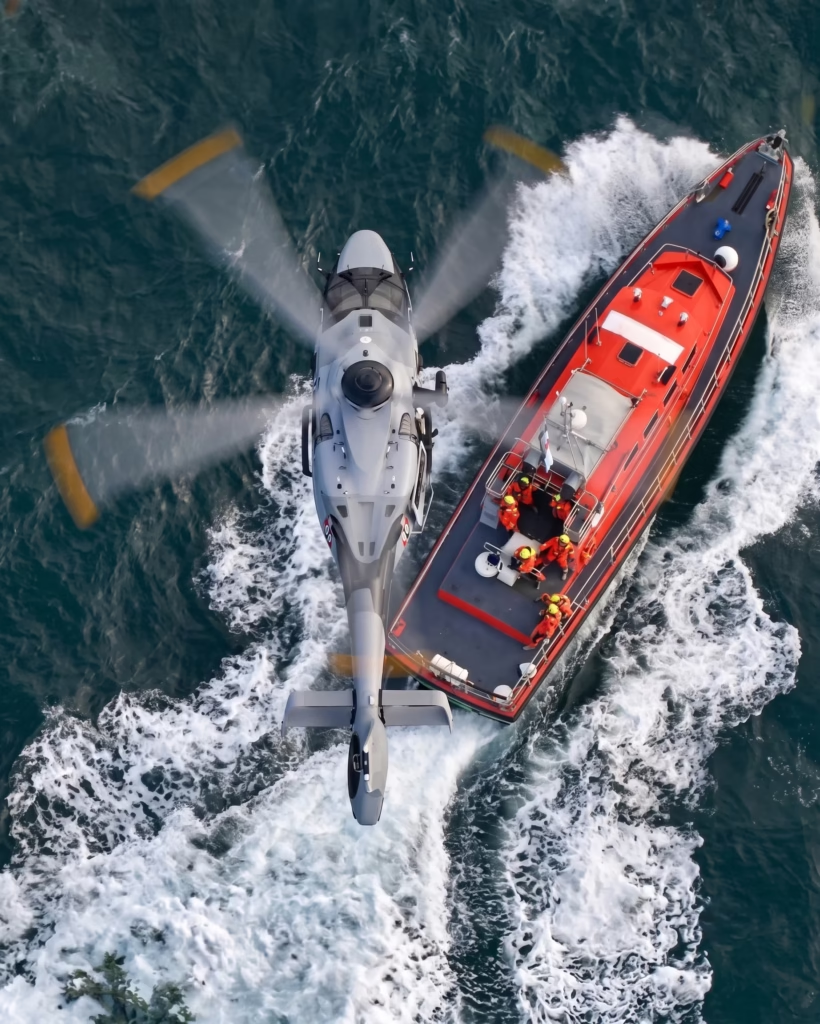
Separate SAR campaigns focused on locations associated with police departments, fire departments and emergency-response organisations, allowing the aircraft proposition to be presented in the context of civilian search-and-rescue operations.
Dedicated microsites were created to support the campaigns, giving prospective customers a focused destination where they could understand the relevant aircraft proposition and immediately connect with the manufacturer.
Building the Campaign
Google Display Network advertising provided the reach required to maintain consistent visibility among geographically dispersed but highly specialised audiences.
Campaigns were separated between CSAR and SAR applications, allowing creative and messaging to reflect the operational priorities of each audience rather than relying on generic aviation advertising.
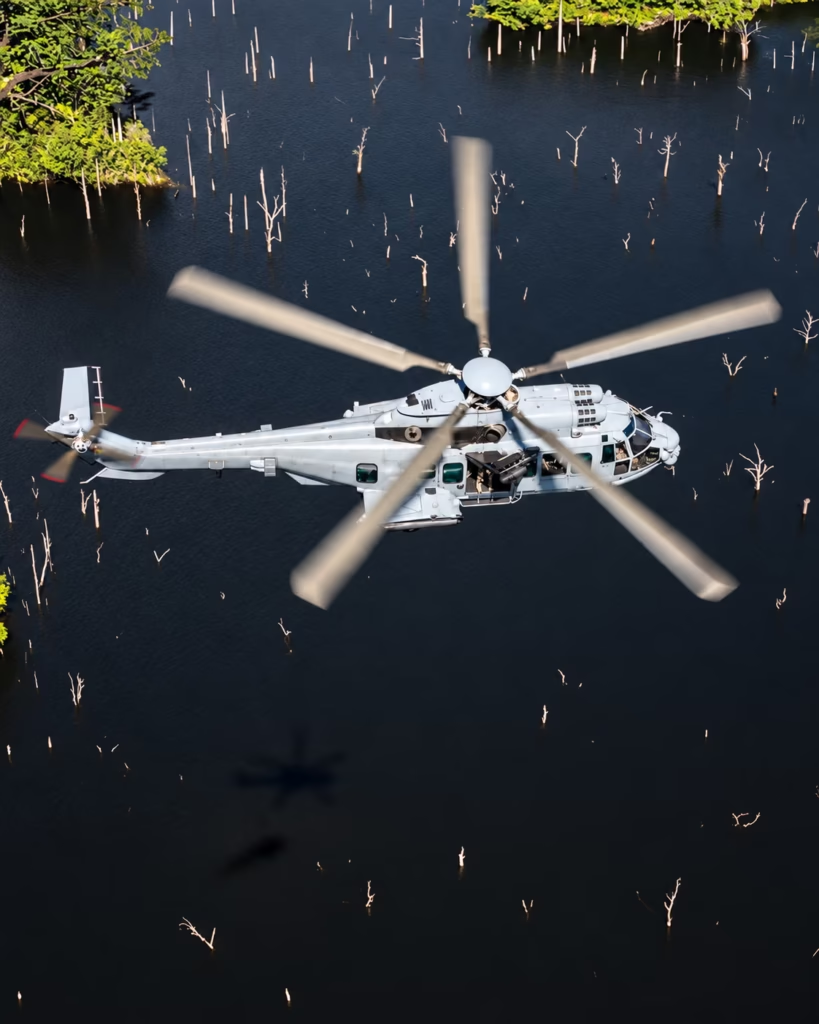
For Combat Search and Rescue audiences, campaign communication focused on the aircraft’s relevance to demanding defence and personnel-recovery missions.
For civilian Search and Rescue audiences, messaging centred around emergency response, rescue capability and the operational requirements of police and fire organisations.
Each campaign directed users towards a dedicated microsite designed specifically around lead generation.
Two clear conversion paths were maintained throughout the programme. Interested organisations could submit an enquiry through a microsite form when requesting further information or could connect directly with the manufacturer’s team through a telephone call.
Campaign optimisation therefore focused on generating meaningful commercial interactions rather than simply maximising impressions or website traffic.
The Impact
Adflow Digital transformed a highly specialised aviation brief into a repeatable monthly lead generation programme capable of consistently producing commercially relevant enquiries.
By separating Combat Search and Rescue and civilian Search and Rescue audiences, aligning messaging with their respective operational requirements and using location-led Google Display targeting, the programme created a far more focused acquisition environment than conventional broad aviation advertising.
Dedicated microsites then converted that awareness into measurable commercial activity through direct calls and structured enquiry forms, giving prospective customers a simple route from initial interest to direct engagement with the manufacturer.
The result is an always-on digital acquisition framework generating more than 80 qualified enquiries every month, providing the aircraft manufacturer with a consistent pipeline of opportunities across the U.S. defence, government and civilian search-and-rescue markets.
Key Results
The ongoing campaigns consistently generate 80+ qualified aircraft enquiries every month across Combat Search and Rescue and civilian Search and Rescue audiences. These enquiries are generated through a combination of direct telephone calls and dedicated microsite forms, creating a continuous pipeline of relevant conversations with defence, government, police, fire and emergency-response stakeholders. The location-led Google Display strategy allows the programme to maintain visibility among highly specialised audiences while limiting unnecessary exposure outside the aircraft manufacturer’s priority markets.